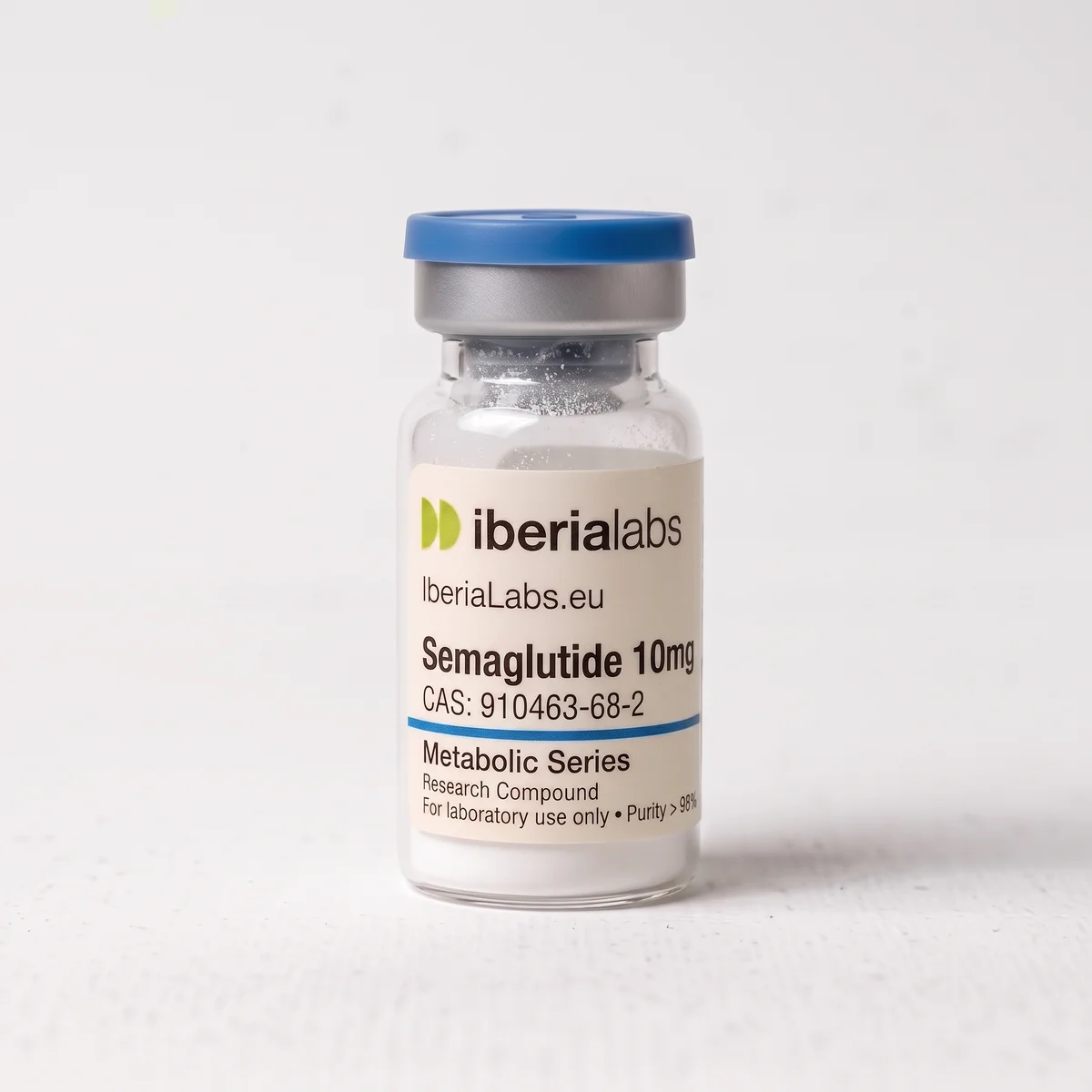
Semaglutide: Long-Acting GLP-1 Receptor Agonist for Glycemic and Weight Regulation
Semaglutide is a modified incretin mimetic designed to provide exceptional stability, glycemic control, and appetite suppression for the management of diabetes and obesity.
Structural Parameters of Semaglutide
| Property | Value and Specification | References |
|---|---|---|
| CAS Number | 910463-68-2 (free base); 910463-74-0 (sodium salt) | |
| Molecular Formula | C187H291N45O59 (free base) | |
| Molecular Weight | 4113.64 g/mol (free base) | |
| Chemical Structure | 31-amino acid peptide, modified GLP-1 analog | |
| Key Modifications | Aib8 substitution and acylation at Lys26 with a C18 diacid | 4 |
Origin, History, and Research Stage
Semaglutide was developed by Novo Nordisk as a weekly alternative to once-daily Liraglutide, entering Phase 3 clinical evaluation under the SUSTAIN and STEP programs. The US FDA approved Semaglutide injection (Ozempic) in December 2017 for type 2 diabetes, an oral tablet (Rybelsus) in 2019, and a high-dose injection (Wegovy) for chronic weight management in June 2021. Its core patents extend protection through 2031–2033 in key markets.4
Mechanism of Action and Pharmacokinetics
Semaglutide acts as a selective agonist at the GLP-1 receptor (GLP-1R), sharing 94% structural homology with native GLP-1.4 Its long half-life is achieved through two modifications: ● Aib at Position 8: This non-coded amino acid substitution prevents cleavage by dipeptidyl peptidase-4 (DPP-4).4 ● Acylation at Lys26: A C18 fatty diacid (octadecanedioic acid) attached via a gamma-glutamyl linker enables high-affinity, reversible binding to human serum albumin.4 These modifications extend its half-life to approximately 165 hours (7 days), permitting once-weekly subcutaneous dosing.4 Semaglutide stimulates insulin secretion and suppresses glucagon release in a glucose-dependent manner 2, while delaying gastric emptying and acting centrally in the hypothalamus to increase satiety.
Scientific and Clinical Effects
In the STEP clinical trial program, once-weekly subcutaneous Semaglutide (2.4 mg) induced an average weight loss of 14.9% to 16% over 68 weeks, accompanied by improvements in blood pressure and lipid profiles. In the SELECT cardiovascular trial, Semaglutide demonstrated a 20% reduction in major adverse cardiovascular events (MACE) in overweight or obese patients without diabetes.