bpc-157 vs. tb-500
In-depth analysis of biological pathways, VEGFR2 angiogenesis vs actin polymerization, and musculoskeletal tissue repair models.
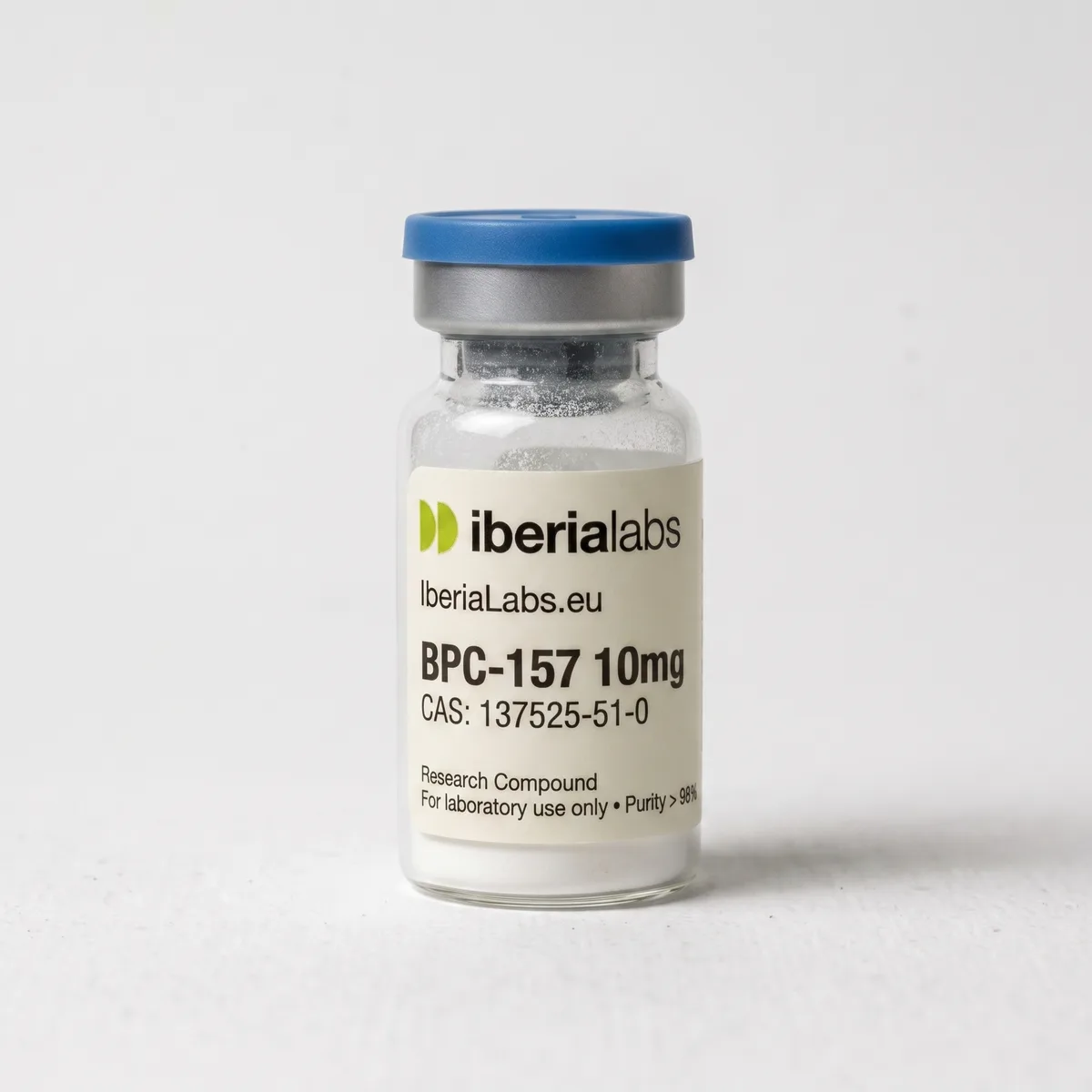
bpc-157
The reference tissue repair peptide. Stimulates VEGFR2 angiogenesis and tendon/ligament healing with batch-certified HPLC purity ≥ 99.0%.
tb-500
Analytical benchmark compound based on Thymosin Beta-4. If looking for an immediate in-stock regenerative peptide, we recommend BPC-157.
Comparative data from landmark clinical trials (NEJM).
Molecular Mechanisms: Angiogenesis vs. Actin Dynamics
BPC-157
BPC-157 (Body Protection Compound 157) is a stable 15-amino-acid peptide derived from gastric secretions. It upregulates VEGFR2/Akt-eNOS signaling in endothelial cells, promoting sustained endothelial nitric oxide production and rapid capillary sprouting into injured tissues. Furthermore, it organizes fibroblast migration by assembling FAK-paxillin focal complexes and activating the EGR1 transcription factor.
TB-500
TB-500 is the synthetic biologically active domain of Thymosin Beta-4 (Tβ4), a 43-amino-acid peptide ubiquitous in animal cytoplasm. Its primary molecular function revolves around sequestering G-actin monomers, orchestrating their polymerization into F-actin filaments during cell motility. This mechanism enables endothelial progenitor cells and myoblasts to rapidly traverse dense extracellular matrices toward ischemic or damaged zones throughout the body.
Connective Tissue & Musculoskeletal Repair Evidence
BPC-157 Clinical Efficacy
In preclinical models of Achilles tendon transection and collateral ligament damage, BPC-157 markedly accelerated the restoration of original tissue biomechanical tensile strength, shortening functional recovery times and fostering parallel, organized type I collagen bundles rather than chaotic scar tissue.
TB-500 Clinical Efficacy
In preclinical studies of contusion-induced skeletal muscle trauma and myocardial infarction models, TB-500 demonstrated an outstanding capacity to stimulate muscle satellite cell differentiation, limit rigid fibrotic scar formation, and preserve contractile function following prolonged tissue hypoxia.
Scientific Synergy & Combined Protocol Rationale
Numerous investigative teams examine the concurrent application of BPC-157 and TB-500 due to their strictly non-redundant complementary mechanisms: while BPC-157 establishes microvascular networks and fastens local cells via focal adhesions, TB-500 mobilizes structural progenitor cells across the extracellular matrix through actin cytoskeleton remodeling.
Pharmacological and analytical specifications.
| PARAMETER | BPC-157 (PL 14736) | TB-500 (TIMOSINA BETA-4) |
|---|---|---|
| Peptide Class & Sequence Length | Stable synthetic pentadecapeptide (15 AA) | Synthetic Thymosin Beta-4 domain (43 AA) |
| Primary Molecular Mechanism | VEGFR2 / eNOS pathway & FAK-paxillin focal adhesion | G-actin to F-actin sequestering & polymerization |
| Tissue Target Selectivity | Focal affinity for tendons, ligaments, and gut mucosa | Diffuse systemic effect across muscle and vascular endothelium |
| Tendon & Ligament Healing Benchmark | Orderly type I collagen deposition without hyper-fibrosis | Accelerated re-epithelialization and perilesional migration |
| Acidic / Gastric Stability | Exceptional stability in gastric juice (>24h intact) | Susceptible to gastric enzymatic degradation |
| Inflammatory Modulation Profile | Modulates nitric oxide (NO) and counters NSAID damage | Suppresses proinflammatory cytokines TNF-alpha and IL-6 |
| Cardiac & Endothelial Remodeling | Rapid collateral capillary sprouting under ischemia | Robust protection against cardiomyocyte apoptosis |
| HPLC / MS Purity Standard | ≥ 99.0% (Liofilizado analítico verificado por lote) | ≥ 99.0% (Estándar analítico de referencia) |
| Availability & Dispatch | In stock in Spain · Express 24-72h EU shipping (no customs) | Analytical research reference benchmark |
ready to order your compound?
All peptides are supplied in vacuum-sealed lyophilized vials with >99% HPLC purity, certified by independent Mass Spectrometry. Dispatched directly from Spain with zero customs delays across Europe.
bpc-157
Lyophilized vials with verified HPLC purity ≥ 99.0%.
tb-500
Lyophilized 10mg and 20mg vials with verified HPLC purity ≥ 99.4%.
Frequently asked questions about BPC-157 vs. TB-500.
Molecular differences, receptor binding profiles, clinical trial benchmarks, reconstitution guidelines, and legal status for laboratory research across Europe.
BPC-157 operates mainly by stimulating VEGFR2-mediated angiogenesis and stabilizing focal adhesions in tendons, ligaments, and mucosal barriers. TB-500 regulates actin dynamics, driving systemic cell motility and myoblast migration toward damaged regions.
They offer complementary synergy: BPC-157 builds the microvascular network and anchors cells locally, while TB-500 accelerates the recruitment and migration of progenitor cells into the injury site.
Both are reconstituted using sterile Bacteriostatic Water (0.9% Benzyl Alcohol). Lyophilized vials remain stable at -20°C for up to 24 months. Once reconstituted, refrigerate at 2°C–8°C away from light for up to 28 days.
Yes. IberiaLabs maintains continuous stock of verified BPC-157 10mg vials (≥ 99.0% HPLC purity) with 24–72h dispatch in Spain and zero customs across the EU.