Bacteriostatic Water: The Indispensable Diluent for Peptide Reconstitution
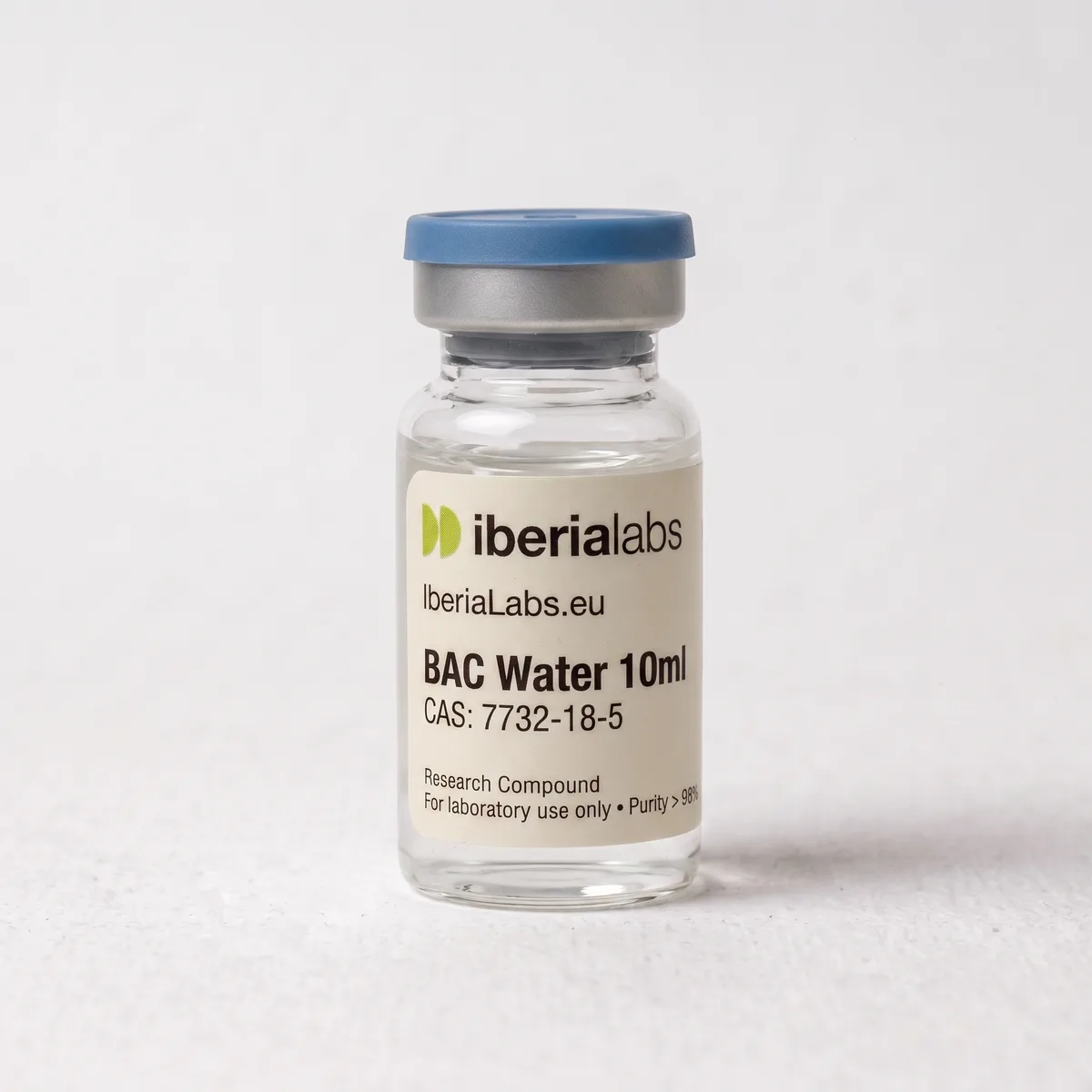
Bacteriostatic Water for Injection is a sterile, non-pyrogenic solution used to reconstitute and preserve lyophilized peptides for research use.48
Structural Parameters of Bacteriostatic Water
| Property | Value and Specification | References |
|---|---|---|
| CAS Number | 7732-18-5 (Water); 100-51-6 (Benzyl Alcohol) Chemical Formula H2O and C7H8O Standards USP (United States Pharmacopeia) compliant 56 pH Range 5.7 (acceptable range: 4.5 – 7.0) |
Origin, History, and Pharmacopoeia Standards
Formulating sterile water with a bacteriostatic agent was standardized in the 20th century under the guidelines of the United States Pharmacopeia (USP) . Large-scale production is maintained by global pharmaceutical firms like Hospira and Pfizer . Due to the immaturity of the benzoic acid conjugation pathway in infants, benzyl alcohol preservation is strictly contraindicated in neonates due to the risk of "gasping syndrome" .
Mechanism of Action and Biological Function
The preservative action of Bacteriostatic Water relies on its 0.9% benzyl alcohol content.56 Benzyl alcohol is a lipophilic aromatic alcohol that readily permeates bacterial cell walls.24 It disrupts the integrity of lipid bilayers, alters cell membrane permeability, and denatures internal bacterial proteins, halting replication (bacteriostatic effect) without immediately destroying the cellular structure.48 This bacteriostatic barrier prevents bacterial proliferation from environmental contaminants introduced via needle punctures in multi-dose vials.56 Solutions reconstituted with BAC water remain sterile and viable for up to 28 days when refrigerated between 2 and 8 °C . Relevance in Peptide Research Due to the thermodynamic instability of peptide bonds in aqueous environments, synthetic peptides are typically lyophilized for storage.60 Since research viales are often accessed multiple times, reconstituting them with plain sterile water necessitates immediate disposal of the unused portion due to the risk of rapid contamination . Reconstituting with Bacteriostatic Water protects the peptide solution from pathogen growth, ensuring reliable experimental results.58