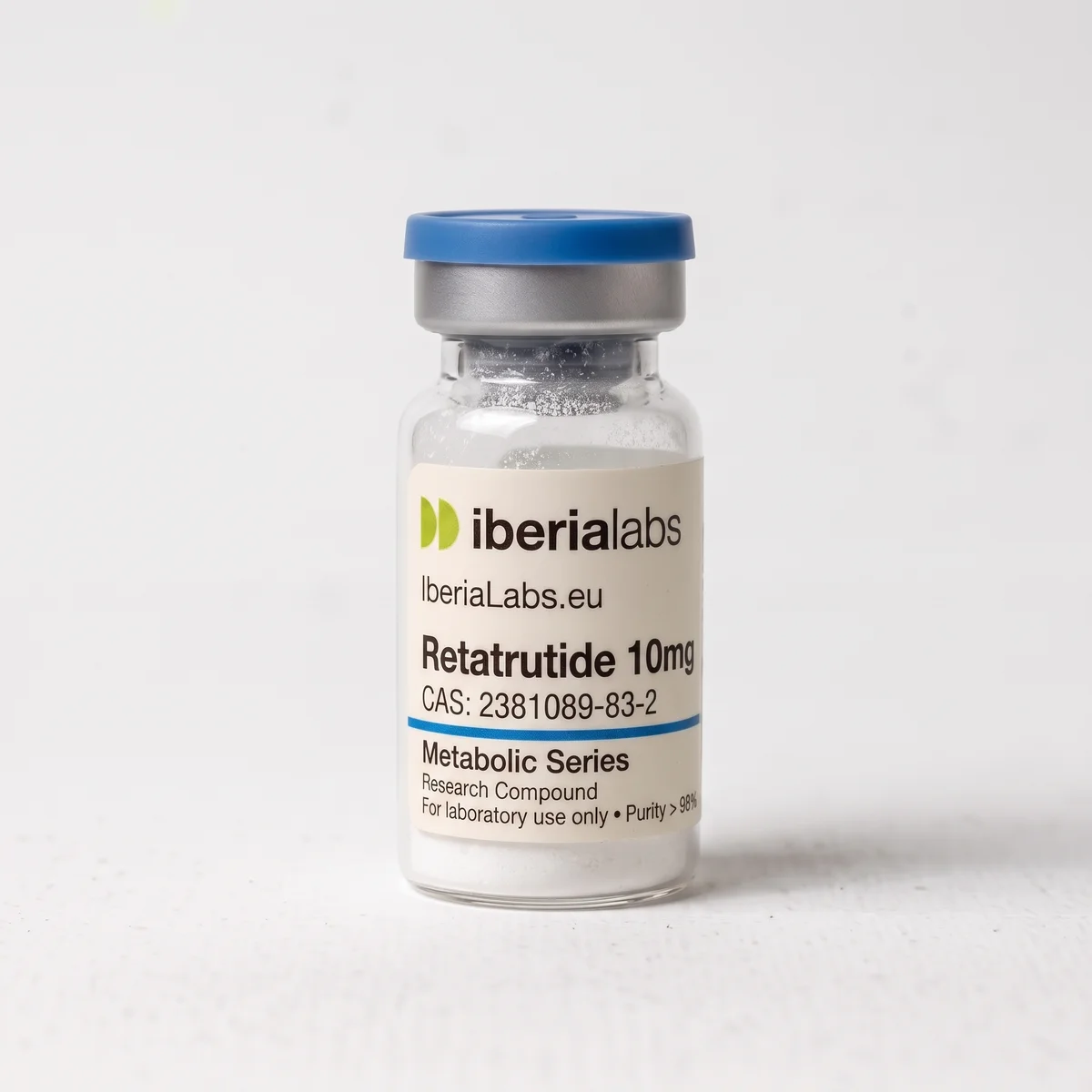
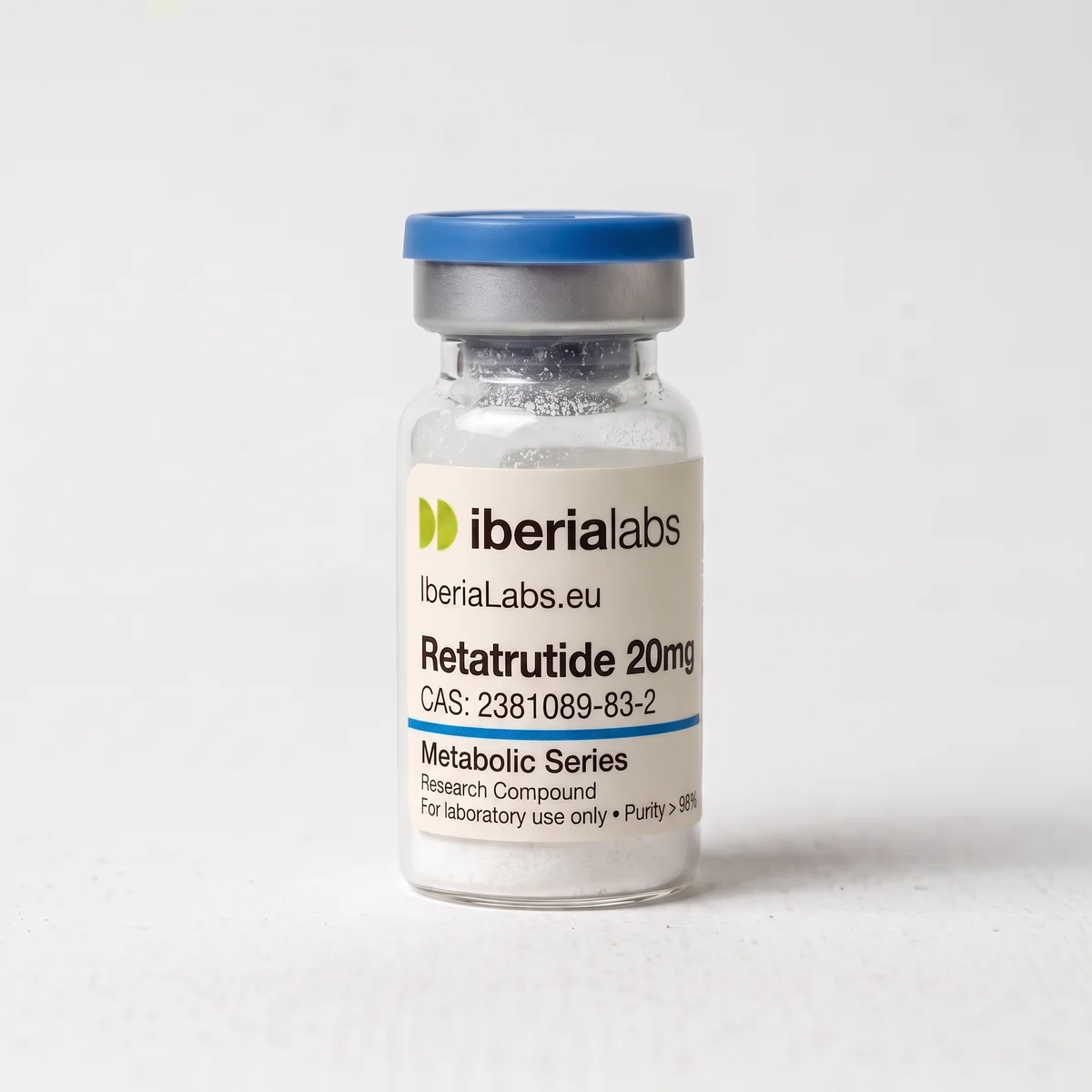
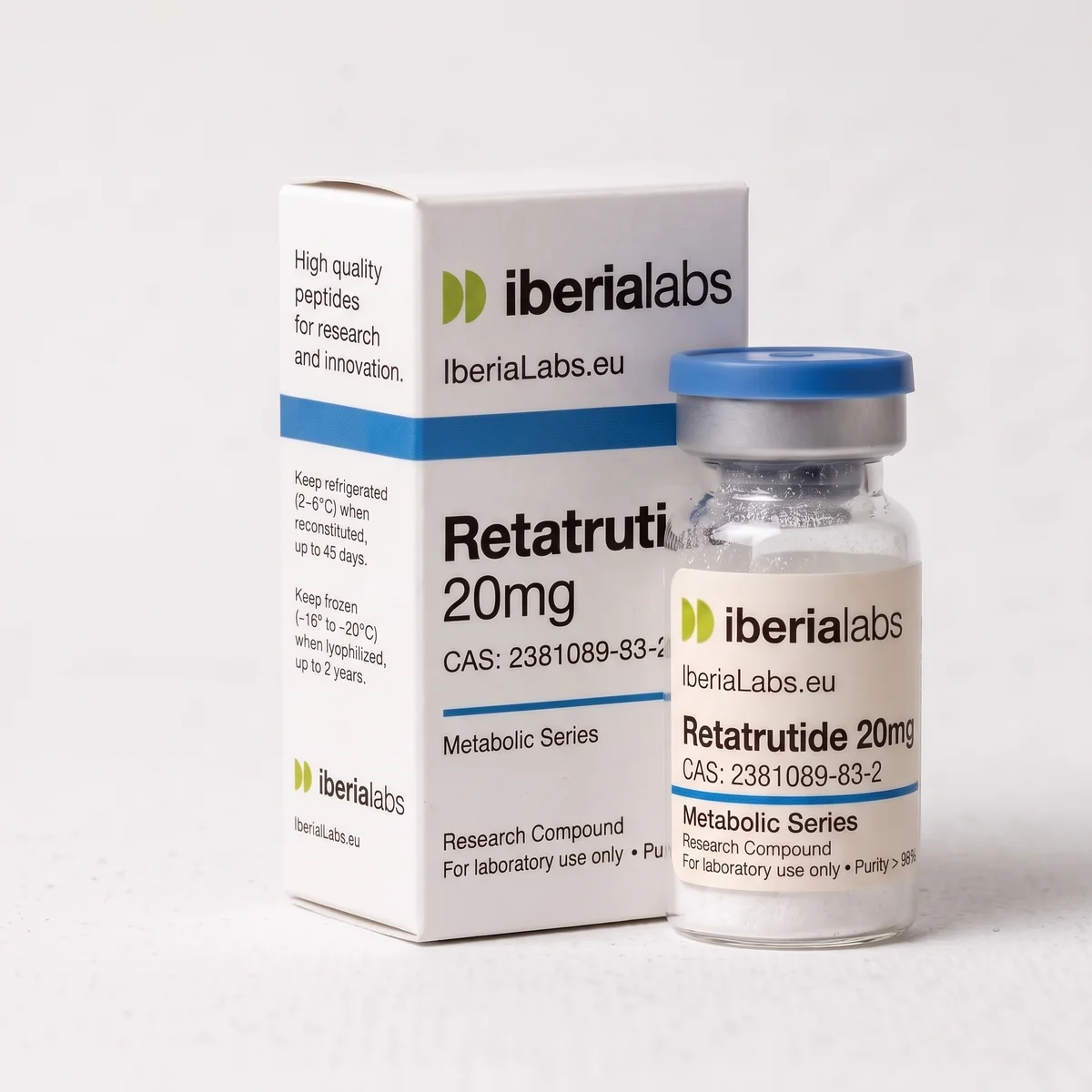
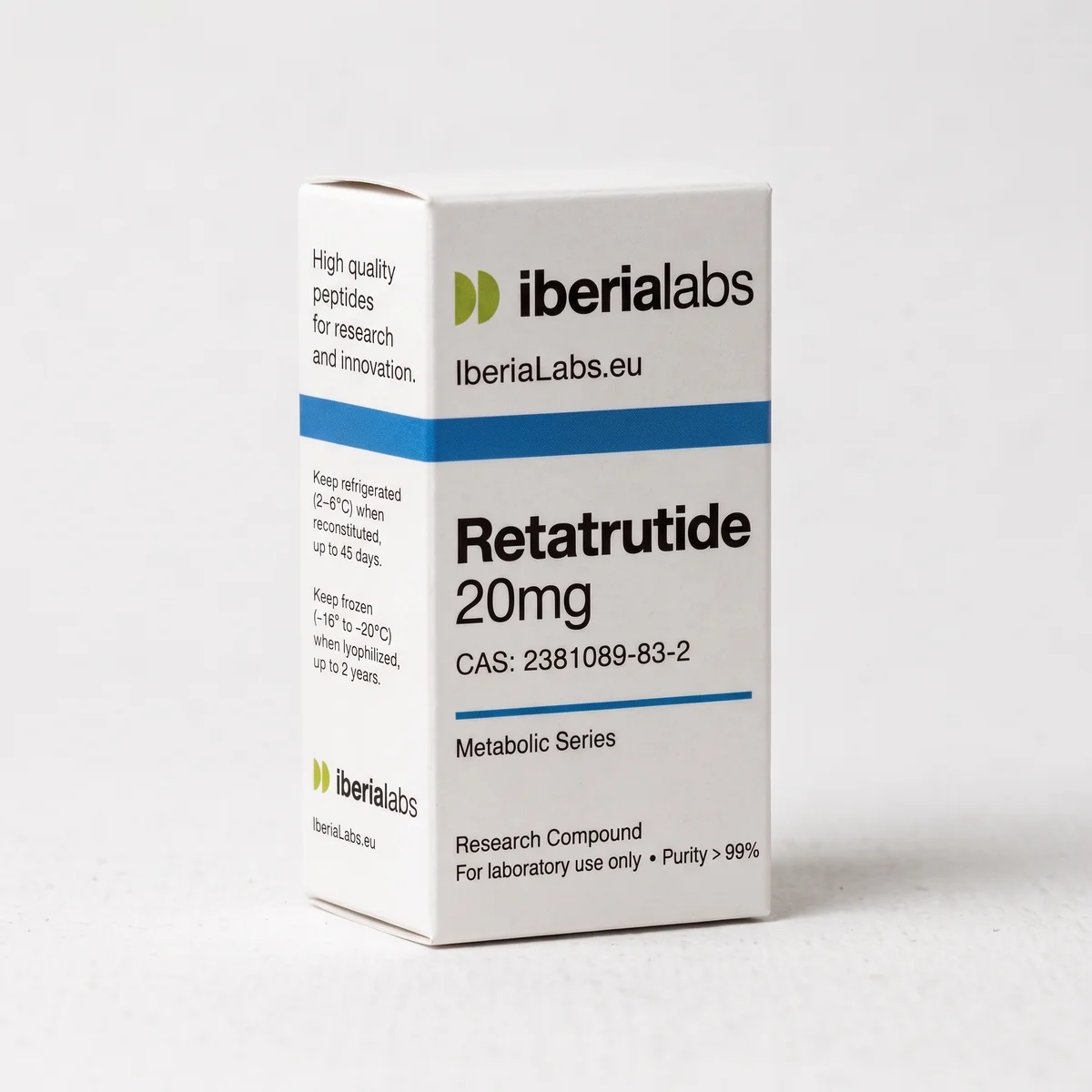
Retatrutide: The Triple Incretin and Glucagon Receptor Agonist
Retatrutide represents a breakthrough in metabolic pharmacotherapy due to its unique triple-receptor agonism.44 This synthetic peptide is engineered to interact simultaneously with the glucose-dependent insulinotropic polypeptide receptor (GIPR), the glucagon-like peptide-1 receptor (GLP-1R), and the glucagon receptor (GCGR).2
Structural Parameters of Retatrutide
| Property | Value and Specification | References |
|---|---|---|
| CAS Number | 2381089-83-2 | 2 |
| Molecular Formula | C221H342N46O68 | 1 |
| Molecular Weight | 4731.34 Da (as sodium salt) | 1 |
| Chemical Structure | Linear 39-amino acid peptide with a modified GIP backbone | 1 |
| Key Modifications | Presence of Aib2, alpha-Me-Leu13, and Aib20 for stability | 2 |
Origin, History, and Research Stage
Retatrutide was developed by Eli Lilly and Company under the developmental code LY3437943.2 Early patent filings and clinical trials were initiated between 2021 and 2022 to overcome the weight loss limits observed with mono- and dual-agonist therapies.2 The compound has progressed rapidly through clinical evaluation. Following successful Phase 2 trials, Eli Lilly launched the global Phase 3 TRIUMPH and TRANSCEND clinical development programs.2 In May 2026, positive topline results from the pivotal 80-week TRIUMPH-1 Phase 3 trial were announced.6 The trial demonstrated that a weekly 12 mg subcutaneous dose of Retatrutide induced an unprecedented mean body weight reduction of 28.3%, with 45.3% of participants losing 30% or more of their baseline weight—a benchmark traditionally associated with bariatric surgery.5 Regulators expect regulatory filings for weight-management and type 2 diabetes indications to take place in late 2026 or early 2027, with potential market launches in the G7 countries by 2028–2029 .
Mechanism of Action and Pharmacokinetics
Retatrutide acts as a potent agonist at all three target receptors.2 In vitro assays show binding affinities (EC50 values) of 0.0643 nM for GIPR, 0.775 nM for GLP-1R, and 5.79 nM for GCGR.7 Its structural layout contains three non-coded amino acid residues to optimize stability and developability.2 Cleavage by the enzyme dipeptidyl peptidase-4 (DPP-4) is prevented by introducing aminoisobutyric acid (Aib) at position 2.2 Pharmacokinetics are further enhanced by substituting alpha-methyl-leucine (alpha-Me-Leu) at position 13 and Aib at position 20, as well as acylating the lysine residue at position 17 with a C20 fatty diacid (eicosanedioic acid) via a PEG2-gamma-glutamyl linker.2 This acylation facilitates reversible binding to circulating human albumin, extending the half-life to support once-weekly subcutaneous dosing.2 Dual GIPR and GLP-1R activation suppresses appetite centrally, delays gastric emptying, and stimulates glucose-dependent insulin secretion.2 Concurrently, GCGR activation elevates energy expenditure by promoting brown adipose tissue thermogenesis, stimulating lipolysis, and clearing lipids from hepatic tissue, positioning Retatrutide as a therapeutic candidate for metabolic dysfunction-associated steatohepatitis (MASH).2