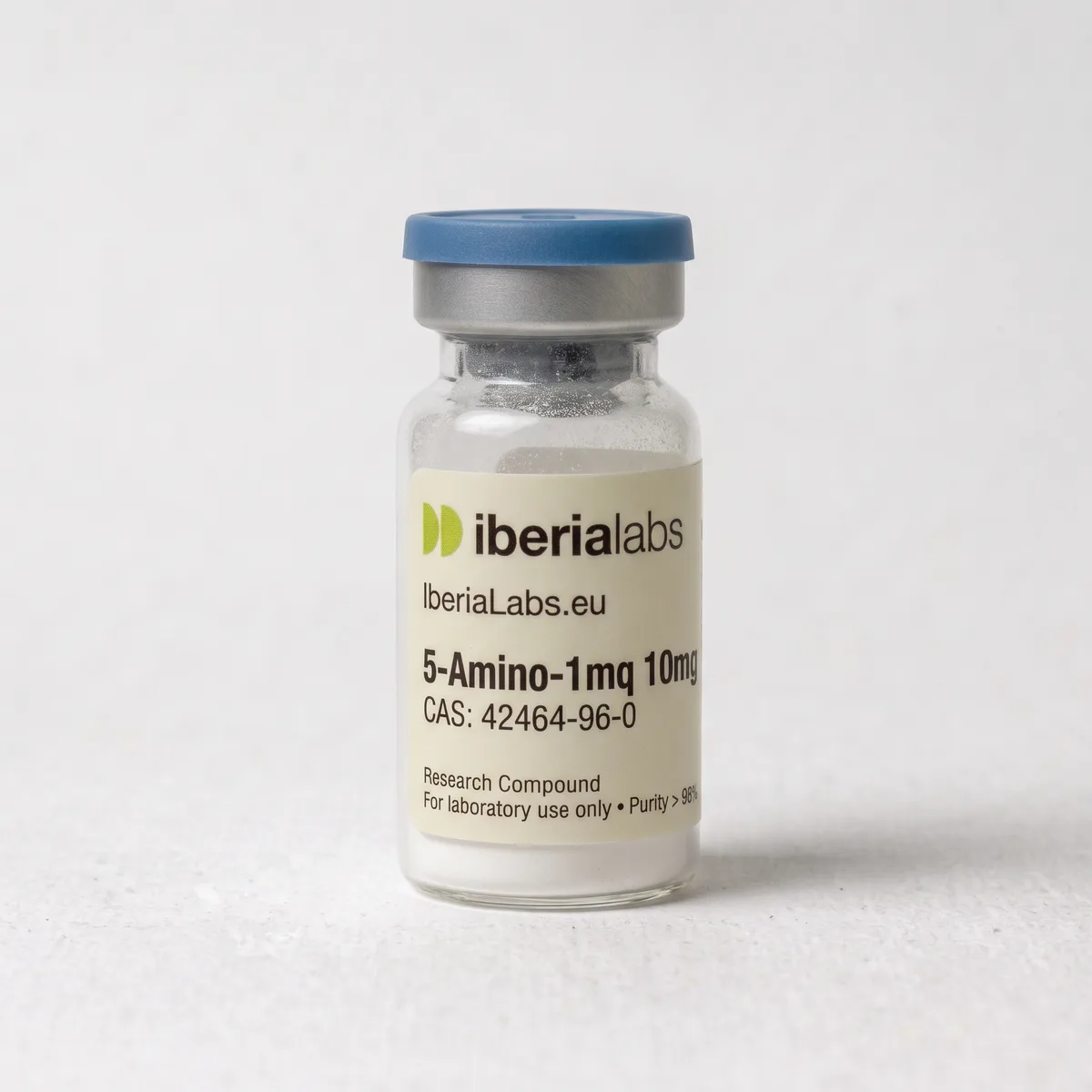
5-Amino-1MQ: Selective NNMT Inhibitor for Metabolic Modulation and Cellular Regeneration
5-Amino-1MQ is a synthetic small-molecule inhibitor of Nicotinamide N-Methyltransferase (NNMT), engineered to elevate intracellular NAD+ levels and combat age-associated metabolic decline.
Structural Parameters of 5-Amino-1MQ
| Property | Value and Specification | References |
|---|---|---|
| CAS Number | 42464-96-0 (typically supplied as iodide salt) | |
| Molecular Formula | C10H11IN2 (iodide salt); C10H11N2+ (active cation) | |
| Molecular Weight | 286.11 g/mol (as iodide salt) | |
| Chemical Class | Synthetic small-molecule quinolinium derivative | |
| Appearance | Red-brown to dark brown solid powder |
Origin, History, and Research Stage
5-Amino-1MQ was developed in 2018 by researchers at the University of Texas Medical Branch (UTMB). The molecule was identified through chemical screening designed to discover membrane-permeable compounds capable of blocking the substrate-binding site of NNMT. Currently, 5-Amino-1MQ is being investigated in pre-clinical studies for obesity, sarcopenia, and muscle stem cell senescence, and is increasingly utilized in anti-aging research.
Mechanism of Action and Pharmacokinetics
The active quinolinium cation of 5-Amino-1MQ selectively inhibits NNMT (IC50 = 1.2 microM). NNMT normally methylates nicotinamide (NAM) using SAM as a methyl donor, converting NAM into 1-MNA and removing it from the NAD+ synthesis pathway. By blocking NNMT, 5-Amino-1MQ prevents this depletion of NAM, redirecting it through the NAMPT salvage pathway to synthesize mononucleótido de nicotinamida (NMN) and subsequently NAD+. The resulting rise in cellular NAD+ activates SIRT1, which in turn upregulates AMPK and PGC-1alpha. This cascade triggers mitochondrial biogenesis and enhances cellular fatty acid oxidation.
Scientific and Clinical Effects
In diet-induced obesity (DIO) mouse models, oral or subcutaneous administration of 5-Amino-1MQ reverses weight gain, shrinks hypertrophic adipocytes, and reduces hepatic lipid accumulation without altering food intake. In aging and skeletal muscle models, 5-Amino-1MQ rejuvenates senescent muscle stem cells (satellite cells), increasing their regenerative capacity and supporting muscle tissue repair after injury.