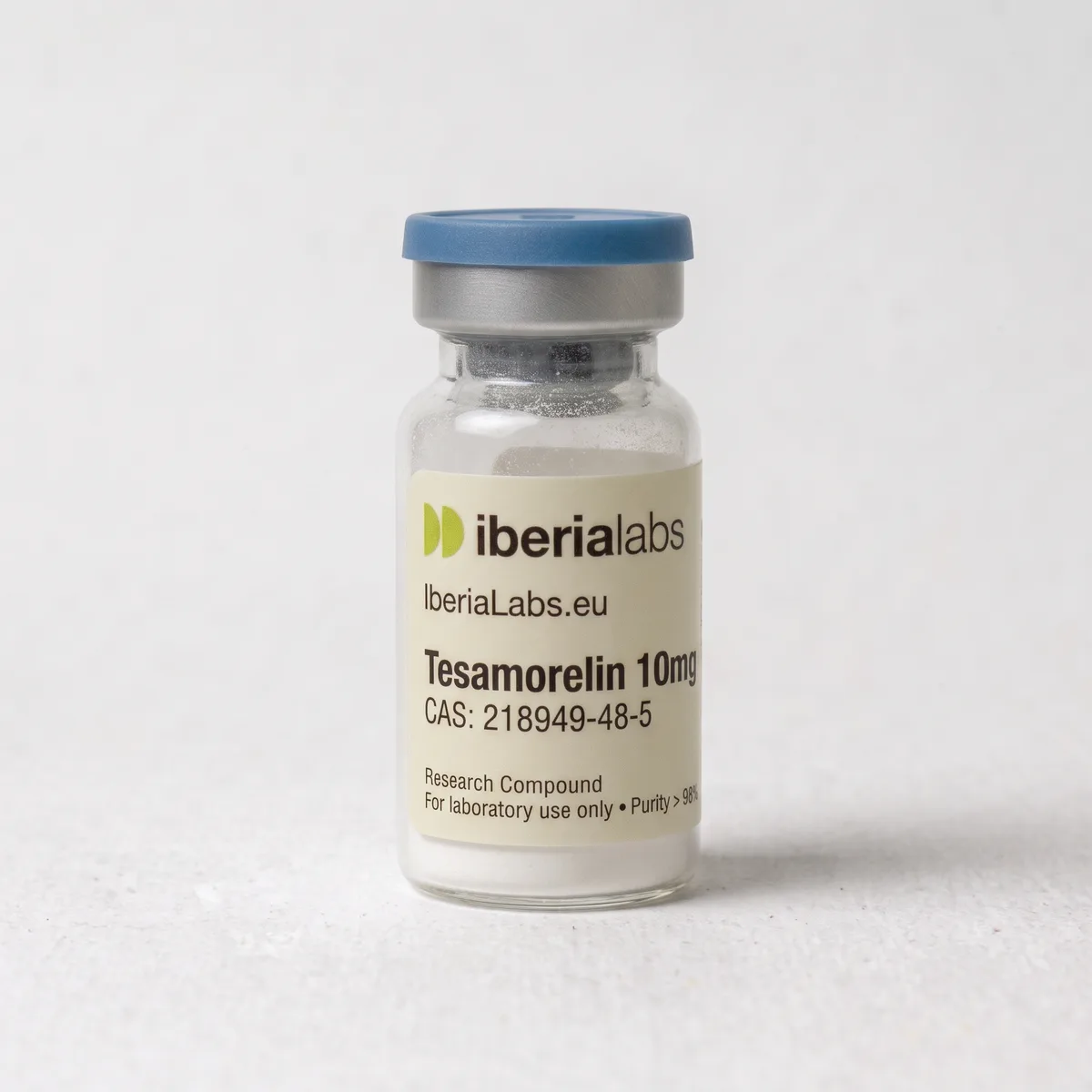
Tesamorelin: GH Axis Stimulation and Selective Visceral Adipose Reduction
Tesamorelin is a synthetic growth hormone-releasing hormone (GHRH) analog designed to stimulate the endogenous release of growth hormone while selectively targeting visceral fat.
Structural Parameters of Tesamorelin
| Property | Value and Specification | References |
|---|---|---|
| CAS Number | 218949-48-5 (free base) | |
| Molecular Formula | C221H366N72O67S (free base) | |
| Molecular Weight | 5135.86 g/mol (free base) | |
| Chemical Structure | 44-amino acid peptide with an N-terminal modification | |
| Key Modifications | 3-hexenoyl group attached to the N-terminal Tyr1 residue |
Origin, History, and Research Stage
Tesamorelin was developed by the Canadian biopharmaceutical firm Theratechnologies Inc. to address metabolic changes in patients with HIV-associated lipodystrophy. The drug received formal approval from the US FDA in November 2010 under the brand name Egrifta. It remains the only approved GHRH analog indicated specifically for the reduction of excess visceral abdominal fat in this patient population, and is actively studied for wider metabolic applications.
Mechanism of Action and Pharmacokinetics
Tesamorelin binds to and activates growth hormone-releasing hormone receptors (GHRHR) in the pituitary gland. It possesses the same 44-amino acid sequence as human GHRH, but the addition of a hydrophobic 3-hexenoyl group at the N-terminus shields the molecule from dipeptidyl peptidase-4 (DPP-4) degradation, increasing its systemic stability. Activation of GHRHR stimulates the synthesis and pulsatile release of endogenous growth hormone (GH). Elevated GH levels trigger the hepatic synthesis of insulin-like growth factor 1 (IGF-1). This elevated GH/IGF-1 axis drives lipolysis and reduces the size of visceral adipocytes.
Scientific and Clinical Effects
Clinical trials have established that daily subcutaneous administration of Tesamorelin reduces visceral adipose tissue (VAT) by an average of 15% to 18% over 26 weeks, without reducing beneficial subcutaneous fat. Furthermore, it has been shown to improve dyslipidemia by lowering triglycerides and non-HDL cholesterol, although patients require monitoring for potential changes in glucose tolerance.